The family was in the Bahamas. Cruise ship in port, twelve people, a day trip to Atlantis. Gus's group and his sister split off to see the aquarium. The plan was to cover everyone — the tickets, the food, the day. The account showed enough money. It always shows enough money right up until it doesn't.
Something had hit the account before they left port. Something automatic, something Gus knew was coming but hadn't mentally subtracted from the available balance. It drained most of what was there for the day. Twelve people, a theme park, and a checking account that lied about how much was actually available. The account balance is not available money. Gus knows this now.
The short version
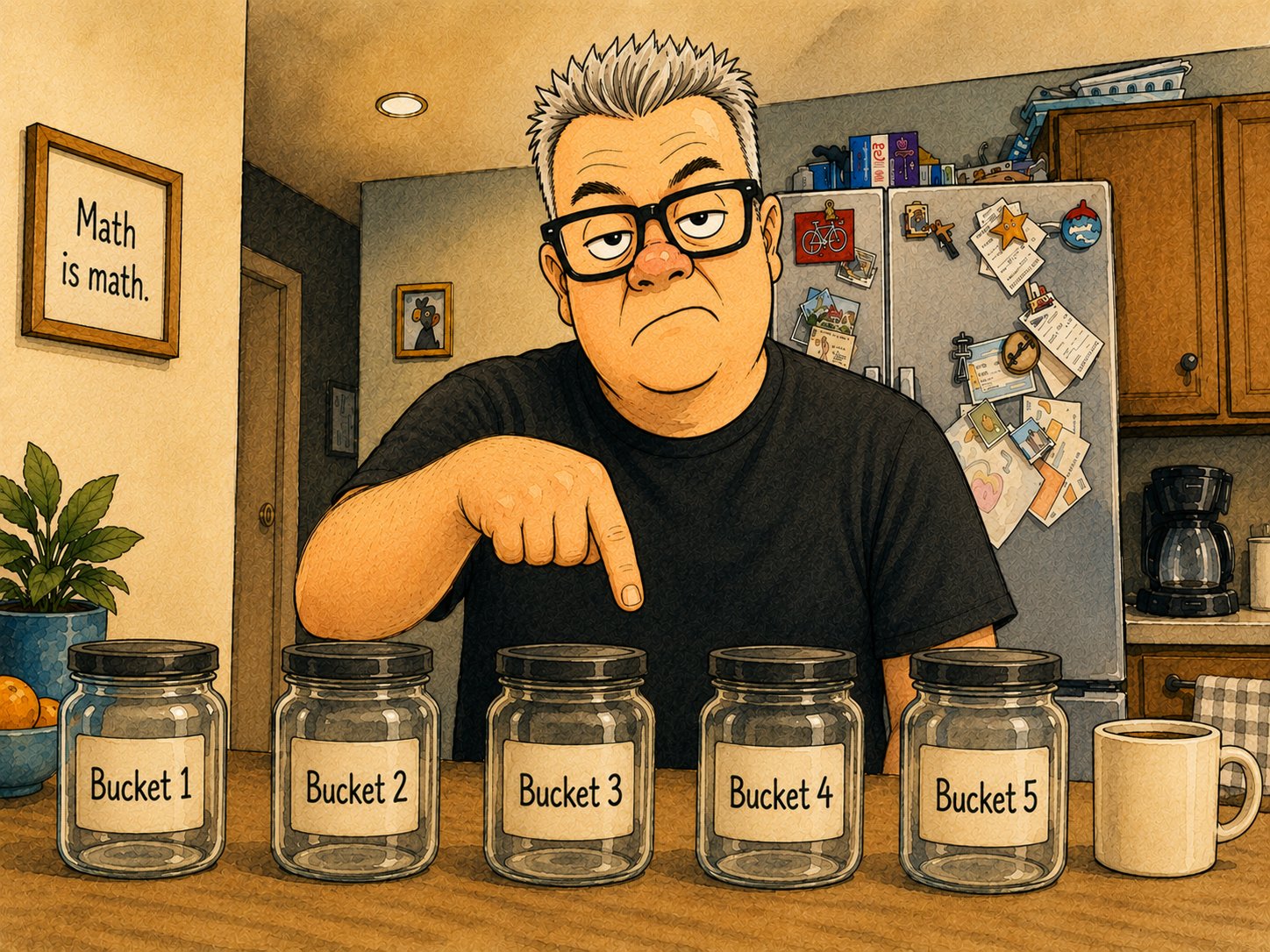
Split every paycheck into five buckets before spending anything: taxes, bills, slow-month buffer, emergency fund, and what's actually left. The last number is the honest number — not the account balance. The account balance includes money that already belongs somewhere else.
Why one account lies to you
When all income and all spending moves through one account, everything looks spendable. The rent money looks spendable. The car insurance money looks spendable. The taxes on last month's side gig look spendable. They are not. They are committed money sitting in an account that has no way of flagging them as committed. The balance shows a number. The number includes money that was never really available.
The Atlantis situation wasn't a budgeting failure in the traditional sense. Gus wasn't being reckless. He looked at the balance, thought it was enough, and was wrong — because the balance included money that had already been spoken for by something he'd stopped actively tracking. That's how one-account households get into trouble. Not always through bad decisions, sometimes just through the account keeping bad records.
Bucket one: taxes
Any income without automatic withholding — side gig payments, freelance work, cash income — carries a tax obligation. That portion is not spendable. It moves to a separate account immediately after deposit, before anything else happens to it. The IRS recommends making estimated quarterly payments if you expect to owe $1,000 or more after withholding. The bucket exists so the money is there when that time comes.
Bucket two: bills
The fixed monthly expenses that keep the household running. Rent, utilities, insurance, phone, minimum debt payments. Calculate this number at the start of the month and move it to a separate account or mentally fence it before anything discretionary gets spent. This is the money that was coming out at Atlantis. It should have been in a different bucket.
Bucket three: slow-month buffer
When income is irregular, a strong month will be followed by a weak one. The slow-month buffer is the reserve that keeps bills paid during the weak months. This builds before the emergency fund — it's the first savings priority for any household where income varies month to month. The CFPB's research on savings behavior shows that even a small buffer significantly reduces financial stress and the likelihood of missing bill payments.
Bucket four: emergency fund
The slow-month buffer handles predictable income variation. The emergency fund handles real disruptions — car breakdown, medical bill, appliance failure, unexpected travel. It builds slowly and deliberately after the buffer exists, not before. Starting with the emergency fund before the buffer is backwards — the buffer is more immediately useful for irregular income households.
Bucket five: safe-to-spend
What's actually left after taxes, bills, buffer, and emergency fund contributions. This is the only truly discretionary money. It's usually smaller than the account balance suggested. That's the point. If Gus had known his bucket five number before that port day, he would have known what was actually available to spend at Atlantis. The account balance was not that number.
How to implement it without perfect willpower
The most effective version of this system uses physical separation — multiple accounts at the same bank, or a combination of checking and savings accounts. Money that moves to a bills account on payday stops being mentally available for spending. You don't need willpower if the money isn't in the account you spend from.
Most banks allow multiple free savings accounts. Some allow you to nickname them. Naming an account "Bills — do not touch" is more effective than trying to remember which portion of the checking balance is committed.
Gus's kitchen-table rule
Before spending anything from a paycheck, calculate what goes to each bucket: taxes first, bills second, slow-month buffer third, emergency fund fourth if the buffer is established. What's left in bucket five is the real number. Not the balance. That number.
Where Gus did his homework
Gus is not a financial advisor. The Money Mess is educational content only — not financial, tax, legal, or investment advice. Based on real life events.