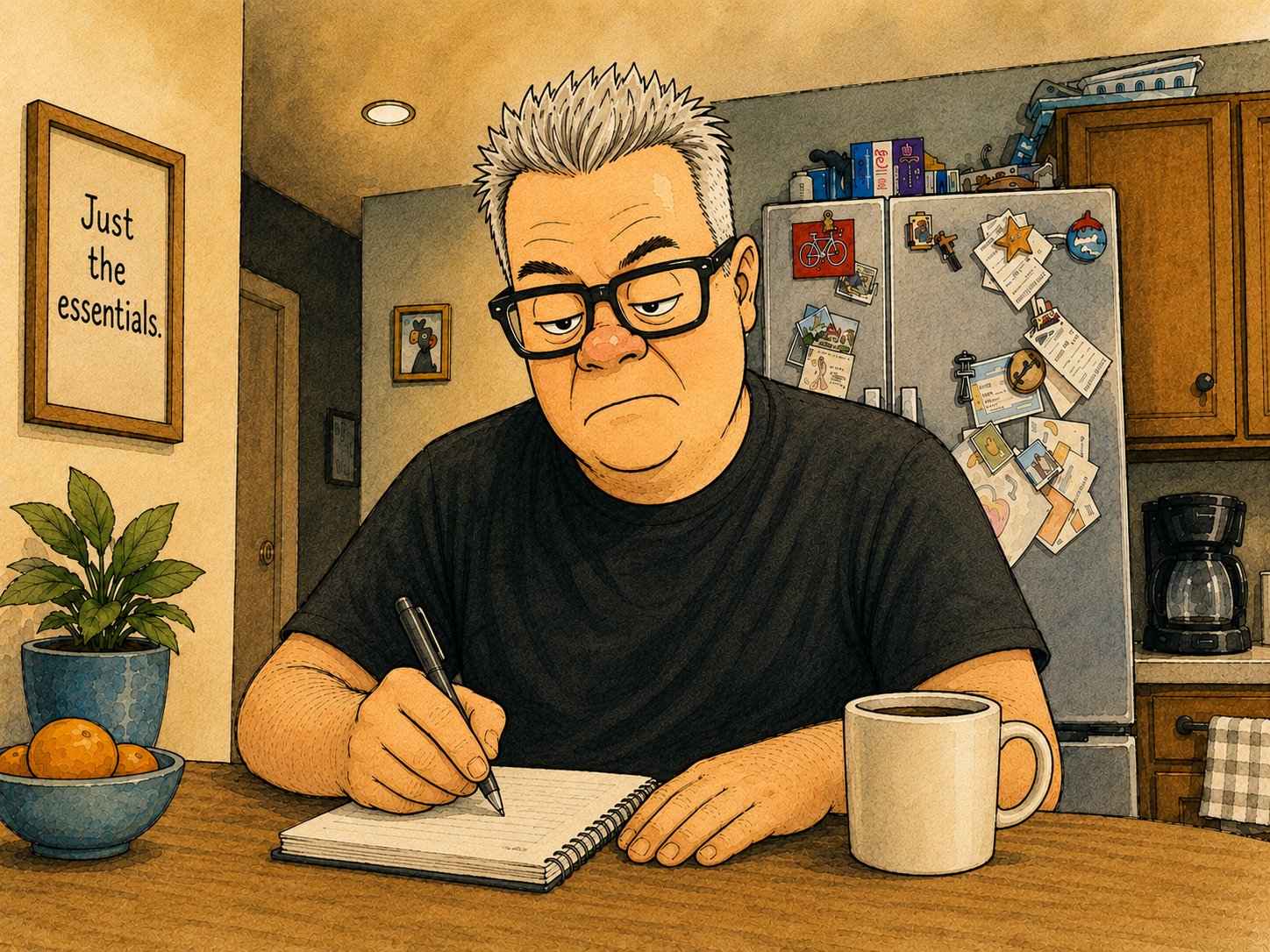
When the main income in Gus's household disappeared, the first question wasn't "how do we save money." It was "how much money do we actually need to not lose the house, the cars, the lights, and the ability to eat." That's a different question and it has a specific answer. That answer is the bare-minimum budget.
The bare-minimum budget is not a life sentence. It's not about living in permanent scarcity or cutting every comfort forever. It's about knowing the floor — the actual monthly cost of keeping the household operational. Once you know that number, you know what you're working with. Before you know it, you're guessing, and guessing is expensive.
The short version
Add up housing, utilities, food, transportation, insurance, and minimum debt payments. Nothing else. That total is the floor. Everything above it is optional until income stabilizes. The number is usually lower than expected — and the gap between the floor and what was actually being spent is usually instructive.
Housing
Rent or mortgage payment, renter's or homeowner's insurance, and any required HOA fees. This is the largest fixed expense for most households and the one with the most severe consequences if unpaid. According to the Consumer Financial Protection Bureau, mortgage servicers are required to work with borrowers before initiating foreclosure proceedings, and most have hardship programs available — but housing still goes first in the budget because the consequences of falling behind are the hardest to recover from.
Utilities
Electric, gas, water, and trash. Basic internet if it is required for work, job searching, or school. That's it. Streaming services, premium tiers, upgraded plans — those are not utilities. They're subscriptions wearing utility clothes. Drop everything beyond functional connectivity.
Food
Groceries at a functional level. Not restaurant meals, not delivery, not convenience store runs. The actual cost of feeding the household at home. For most households this number is significantly lower than the total food spending in a normal month once restaurant and delivery spending is removed. If you don't know what your actual grocery number is separate from food delivery and dining out, pull three months of bank statements and find it.
Transportation
Car payment if applicable, car insurance, and fuel for work commute and essential errands. A basic maintenance reserve — even $50 a month set aside — prevents a routine repair from becoming a crisis. Not rideshare for convenience, not extra vehicles beyond what the household actually needs to function. Transportation that enables income stays. Everything else is optional.
Insurance
Health insurance, car insurance, and life insurance covering dependents. These protect the household's ability to recover from disruption. A medical bill without insurance or a car accident without coverage can turn a manageable situation into an unrecoverable one. Insurance stays in the bare-minimum budget even when everything else is getting cut.
Minimum debt payments
The minimum payment on every account that will go to collections, report late payments, or accrue penalties if missed. Not extra payments. Not payoff goals. Not the accelerated payment you set up when things were better. Just the minimums that keep accounts from making the situation worse while the household stabilizes. The CFPB notes that paying only minimums means debt takes longer to pay off, but in a stabilization period the goal is not optimization — it's survival without additional damage.
What does not belong in this number
Subscriptions. Dining out. Entertainment. Gym memberships. Clothing beyond immediate necessity. Hobby expenses. Amazon impulse purchases. None of these are emergencies. They all feel necessary when they're part of a normal life, but none of them keep the household functional. They return after the floor is secure. Right now they are not in the number.
What to do with the floor
Compare it to actual income. If income covers the floor, the situation is manageable — it needs organization and a plan. If income does not cover the floor, the gap is real and specific, and you can stop guessing about how bad it is. A specific gap is a problem that can be worked on. A vague sense that things are bad is just stress.
Gus found his floor was lower than he'd assumed. He also found he'd been spending a significant amount each month above the floor on things that had become invisible in the normal flow of life. Seeing both numbers at once was uncomfortable and useful at the same time.
Gus's kitchen-table rule
Know the floor before anything else. Housing, utilities, food, transportation, insurance, debt minimums. Add them up. That's the number. Everything else is optional until that number is covered. You cannot make good decisions about money without knowing how much you actually need.
Where Gus did his homework
Gus is not a financial advisor. The Money Mess is educational content only — not financial, tax, legal, or investment advice. Based on real life events.