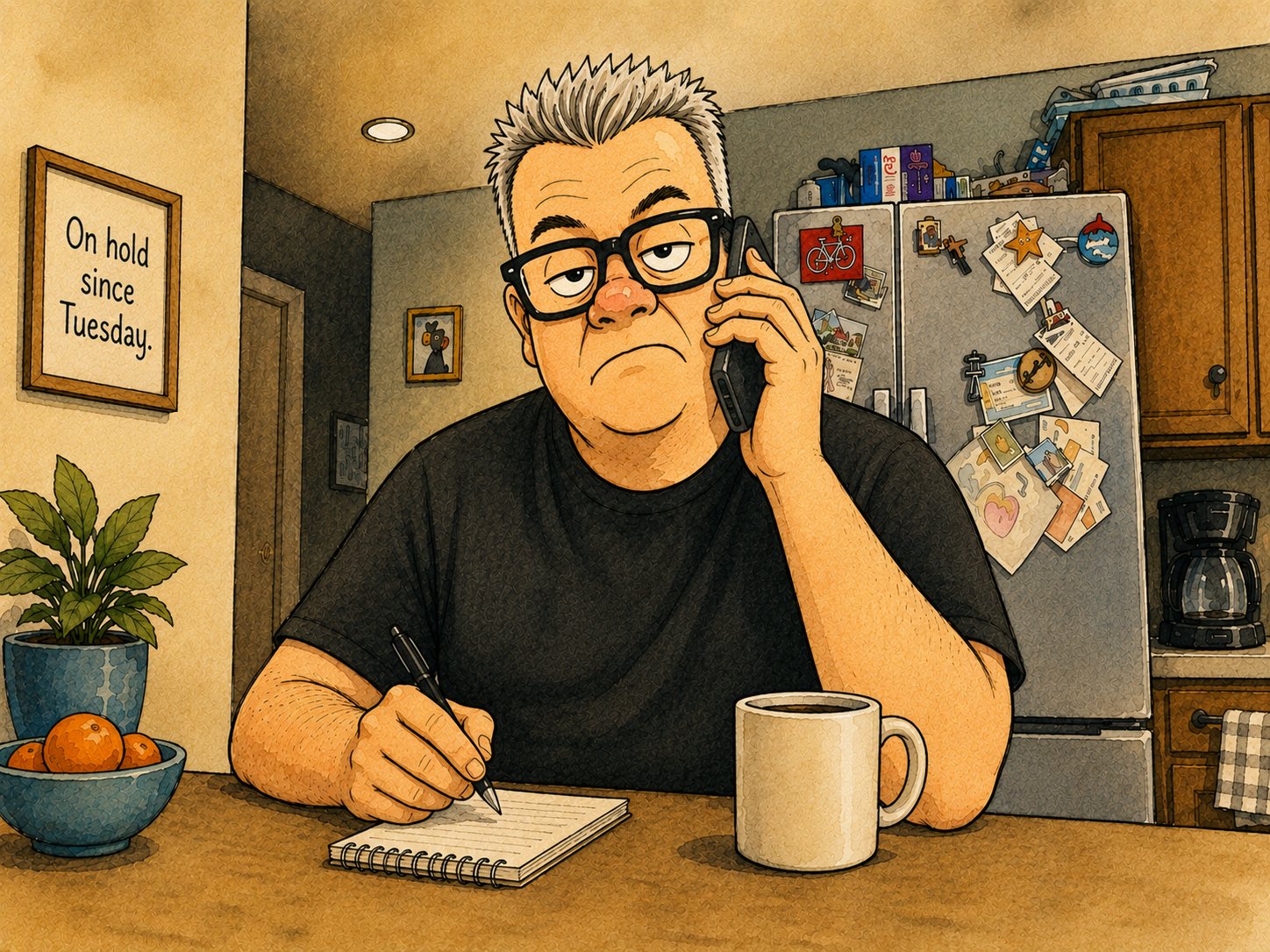
Gus's credit has hovered in the mid to high 500s for years. Not because of one bad decision that can be pointed to and explained away — because of the slow accumulation of robbing Peter to pay Paul, of late payments that happened because the money went somewhere else first, of collections that piled up from the years when there wasn't enough to cover everything and the credit card was the bill that got skipped when something more urgent showed up.
That's how a lot of people end up in the 500s. Not from one disaster. From years of triage decisions, each one reasonable at the time, that added up to a credit report that looks like a document of every hard month in the last decade. Looking at that report feels like being graded on the worst years of your financial life. It's hard to start fixing it when the list is long and the starting point isn't clear.
The short version
Pull the free reports from AnnualCreditReport.com. List every negative item. Check every item for errors — they're more common than people expect. Dispute errors first, they're free to fix. Then prioritize by impact. Recent late payments hurt more than old ones. Collections near the seven-year reporting limit may age off soon. Know what you're working with before deciding what to tackle first.
Why the 500s feel like a trap
Credit in the mid to high 500s is high enough that you don't qualify for most assistance programs that assume you're credit-invisible, but low enough that financing anything costs significantly more, rental applications get denied, and some jobs do credit checks as part of hiring. It's the gap where the damage is real and the path forward isn't obvious.
The trap feeling comes from the sense that every bill paid late adds another mark, every collection account sits there for seven years, and the hole keeps getting deeper while you're trying to climb out of it. That's not entirely wrong — but it's not the whole picture. Credit scores respond to current behavior faster than most people realize, and the oldest negative items affect the score less as they age.
Pull the reports first — all three
Go to AnnualCreditReport.com — the only federally authorized free credit report site. Pull all three: Equifax, Experian, and TransUnion. They are not identical. A collection account that appears on one bureau may not appear on another. An error on one report may not exist on the others. You need all three to know what you're actually dealing with.
Don't pay for reports at this stage. The free reports from AnnualCreditReport.com give you the information you need to start. Paid monitoring services come later if they're useful — but the free reports are the starting point.
List every negative item
Write down every negative entry across all three reports: collection accounts, late payments, charge-offs, judgments, accounts in collections. For each one, note the creditor, the balance if applicable, the date of first delinquency, and which bureaus are reporting it. This is not a fun exercise. It's the map. You cannot navigate without a map.
Check every item for errors
Credit report errors are more common than most people expect. According to a Federal Trade Commission study, one in five consumers has an error on at least one credit report that could affect their score. Common errors include: incorrect balances, duplicate accounts listed twice, accounts that aren't yours, payments reported late that were actually on time, and negative items that should have aged off the seven-year reporting window but haven't.
Errors that lower your score can be disputed and removed. This is the first repair action to take because it costs nothing, requires no payment, and can move the score without any of the underlying debt being resolved. The CFPB's guide to disputing credit report errors walks through the process of submitting a dispute directly to each bureau.
Understand the seven-year clock
Most negative items — late payments, collections, charge-offs — remain on credit reports for seven years from the date of first delinquency. The CFPB confirms that after seven years, most negative items must be removed. This means some items on a long credit report are closer to falling off than they appear. An item from 2019 is due to age off in 2026. Knowing the dates matters for prioritization — a collection account that's aging off in six months is a different problem than one that just got added.
What actually moves the score
The biggest factors in a credit score are payment history and credit utilization. Payment history is about what happens from this point forward — every on-time payment from here adds a positive data point. Credit utilization is about how much of available revolving credit is being used — keeping balances below 30 percent of the credit limit helps, and below 10 percent helps more.
For a household in the 500s with a long list of negatives, the most practical immediate actions are: dispute any errors, stop adding new negative marks by paying current accounts on time even if that means minimum payments only, and let old negative items age. The score won't jump overnight, but it does respond to consistent current behavior over time.
On the collections
Dealing with collection accounts is complicated. Paying a collection account does not remove it from the credit report — it updates the status to "paid collection," which is better but the account still appears. The CFPB recommends verifying any collection debt in writing before paying, as some debts may be past the statute of limitations for lawsuits or may contain errors. Paying old collection accounts can sometimes restart activity on debts that were otherwise dormant — knowing the details before making contact matters.
Gus's kitchen-table rule
Pull the reports. List everything. Check every item for errors and dispute the errors first — they're free to fix and sometimes worth real points. Know the dates so you know what's aging off soon. Pay current accounts on time from this point forward. The 500s are not permanent. They respond to consistent behavior. It takes time and it's worth starting now.
Where Gus did his homework
- AnnualCreditReport.com — Free Credit Reports
- Consumer Financial Protection Bureau — Disputing Credit Report Errors
- Consumer Financial Protection Bureau — How Long Negative Information Stays on Reports
- Consumer Financial Protection Bureau — Dealing With Debt Collectors
- Federal Trade Commission — Credit Report Error Study
Gus is not a financial advisor. The Money Mess is educational content only — not financial, tax, legal, or investment advice. Credit rules and reporting timelines can vary — verify current information with the CFPB or a qualified credit counselor. Based on real life events.